


How Unilever’s grocery sales team started making commercial calls in the room
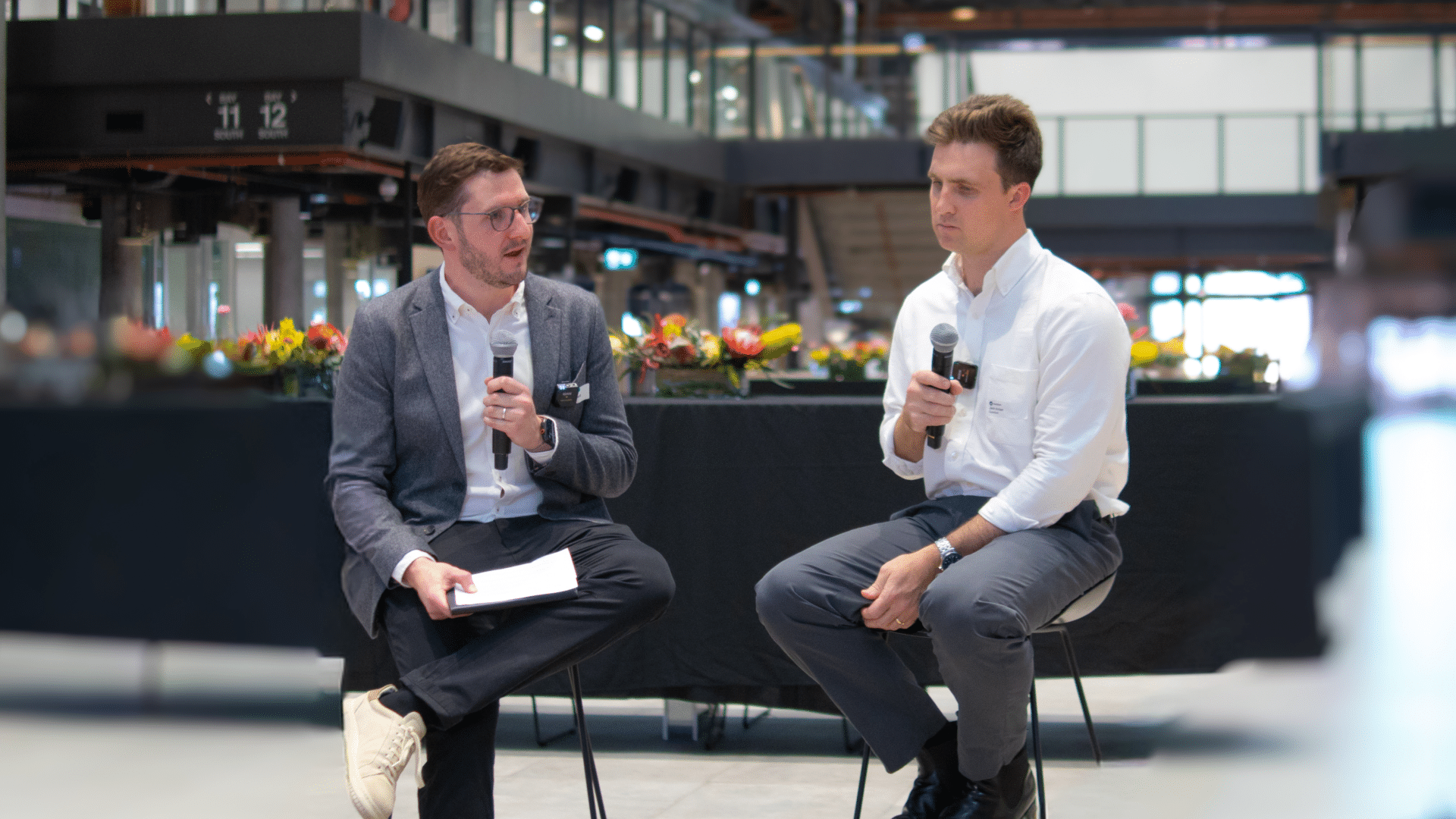
At Quantium’s AI Advantage in FCMG event, we were joined by Jack Archer, Head of Grocery Sales from Unilever who shared his experience with using AI in his organisation.
Most large FMCG businesses now have AI running in several places at once, mandated centrally and rolled out on a choose your own adventure basis. Unilever is one of them, on Jack’s own account, teams elsewhere in the group working on everything from digital twins in factories through to procurement and marketing. In a business that size the next question is always the same one, and Jack Archer, Head of Grocery Sales at Unilever in Australia, has been asked to answer it. Show the return.
His answer is not a program update. It is a commercial call that got made in the room instead of a fortnight later, and a clear line of sight to giving his team back the time that routine work currently eats. Time that belongs with customers, where partnerships get built and commercial value gets delivered.
Jack shared the story on stage at our AI Advantage event in August. Unilever has been in pilot with the capability for four to five months, and Jack runs the commercial team that uses it. It is a commercial call, described by the person accountable for it.
A brand was losing traction, and the familiar levers were already forming in the room. More promotional support, sharper execution in store, more money behind the line until things settle. Those levers are well understood and easy to reach for, which is exactly why the teams who pause to check the diagnosis first tend to end up somewhere more interesting.
“Very clearly one of our brands was losing traction in the market,” he said. “From a commercial point of view we can be very quick to blame the tools around not getting the execution in store, not getting the promotional support, and quick to invest more money into driving promotions, which is a drain on our P&L.”
The analysis pointed somewhere else. Execution and promotional weight were not the issue. The brand was not bringing on new shoppers, and penetration had fallen particularly among a younger audience.
“We made a call to shift investment, not to start promoting more and not to start trying to drive sales with the retailer, but to really invest into our marketing,” Jack said. “That is now live in market and starting to flow through.”
The conclusion is only half the story, because a strong analyst would have found it eventually. What makes this worth the attention of any commercial leader is the timing.
“Now we are solving these problems in the meeting room and we are able to make those decisions, as opposed to having to set up a work stream and then have a meeting in two weeks’ time. We are able to get the data in real time in that room, everyone is on the same page and able to make the decision in the room.”
The mechanic underneath it is not complicated. The question gets asked and answered while the people who need the answer are still in the room and the decision is still open.
That is what separates a decision that shows up in the P&L from one that only ever shows up in a dashboard. The investment call moved while it was still live. Left a fortnight, that kind of call usually resolves itself in favour of the reflex.
The habit has since taken hold. “It has become the first port of call on any decision making. Whenever we see a problem, let’s understand this through the eyes of Q.Checkout AI, and then we are able to work and brainstorm with the tool to understand the solutions that we might take.”
Getting there took time, which is worth saying plainly because it is the normal experience rather than the exception. The first stretch of the pilot went on experimenting with the capability and building trust in it, and Jack is candid that changing how people work does not happen quickly. The Australian business spent that first phase on adoption, moving from the category teams to sales and on to the brand teams. “It has very much been a welcome new member of the team,” he said.
The next phase is more deliberate. “We are really trying to slow down as a business and take that time out to identify the critical paths we want to go after. The way we have been doing that is quite simply identifying where a lot of the time and resource is being spent, which can be automated and can be done in a different way.”
Which is where the return finally shows up. “I run the commercial team. They are not going to be AI experts, but they are going to benefit a lot from these work processes being taken off their hands.” That is the time Jack expects to redirect into customer relationships.
None of this is one big program. It is a run of sharper calls on promotions, on marketing and on where the investment dollars go, compounding over time. So, take the last significant decision your team made under time pressure and ask what you would have chosen if the full picture had been in front of you on day one rather than a fortnight later. That question tends to point straight at the opportunity.
The views expressed are Jack Archer’s own, shared in a fireside chat with Quantium’s Justin Gerhardt at the AI Advantage event in August 2026.
About the AI Advantage in FMCG event
AI Advantage brought together 128 senior leaders from 78 FMCG and retail companies across two invite-only evenings in Sydney and Melbourne. The focus was practical: moving AI from roadmap to measurable P&L impact.
Read the full event wrap-up, including perspectives from Quantium leaders, Google Cloud and other FMCG clients.
Q.Checkout AI gives commercial teams the visibility to answer category questions in the moment they arise, using real shopper transaction data from Woolworths. To understand what that looks like for your category, talk to our team.